when shoulder pain demands an mri signs you can t ignore

when shoulder pain demands an mri signs you can t ignore

Persistent shoulder pain is more than a daily annoyance; it can be a silent signal of a significant underlying problem. While many find relief through rest and physical therapy, some symptoms are urgent cries for a deeper investigation. So, when does shoulder pain demand an MRI? Knowing the signs you can't ignore is crucial for a swift diagnosis and effective treatment.

This guide will help you understand the red flags, the benefits of advanced imaging, and what to expect from the process, empowering you to take the next step toward recovery.

Is Your Shoulder Pain Serious? 7 Signs You Demand an MRI

Persistent shoulder pain can be more than just a nuisance; it can be a red flag for a significant underlying injury. While rest and physical therapy help many, there are times when your symptoms scream for a deeper look. But when does shoulder pain demand an MRI? How do you know if you need this advanced imaging over other tests like an X-ray or CT scan?

Understanding the signs you can't ignore can speed up your diagnosis, treatment, and recovery. This guide breaks down the benefits of an MRI, compares it to a CT scan, discusses cost and comfort, and concludes with how modern diagnostics lead you back to a pain-free life.

Signs Your Shoulder Pain Needs an MRI Scan

Your doctor will likely suggest a shoulder MRI if you have:

  1. Severe Pain After Injury: A sudden pop or acute trauma followed by intense pain and weakness.

  2. Persistent Pain: Pain that lasts for 6+ weeks despite conservative treatment like rest, ice, and medication.

  3. Limited Range of Motion: Inability to lift your arm or perform daily activities like dressing or reaching.

  4. Night Pain: Pain that consistently wakes you up or prevents you from sleeping on the affected side.

  5. Weakness & Instability: A feeling that your shoulder is "giving way" or significant loss of strength.

  6. Failed Previous Treatment: No improvement after guided physical therapy or corticosteroid injections.

  7. Suspected Complex Soft Tissue Damage: When the issue likely involves tendons, ligaments, labrum, or cartilage—structures an X-ray can't see.

An MRI machine uses powerful magnets and radio waves to create exceptionally detailed images of these soft tissues, making it the gold standard for diagnosing rotator cuff tears, labral tears, and shoulder impingement.

MRI vs. CT Scan: Which is Right for Your Shoulder?

This is a common dilemma. Here’s a quick comparison:

  1. MRI (Magnetic Resonance Imaging): Best for soft tissue. It excels at visualizing muscles, tendons, ligaments, cartilage, and bone marrow. For most non-bone shoulder issues, an MRI is superior.

  2. CT Scan (Computed Tomography): Best for bone detail. It uses X-rays to create cross-sectional images, superb for complex fractures, bone tumors, or joint abnormalities. However, it offers poor soft tissue contrast compared to MRI.

Your doctor will choose based on the suspected injury. Often, an X-ray comes first to rule out fractures, followed by an MRI scan to investigate the soft tissues.

What to Expect:Comfort, and the MRI Process

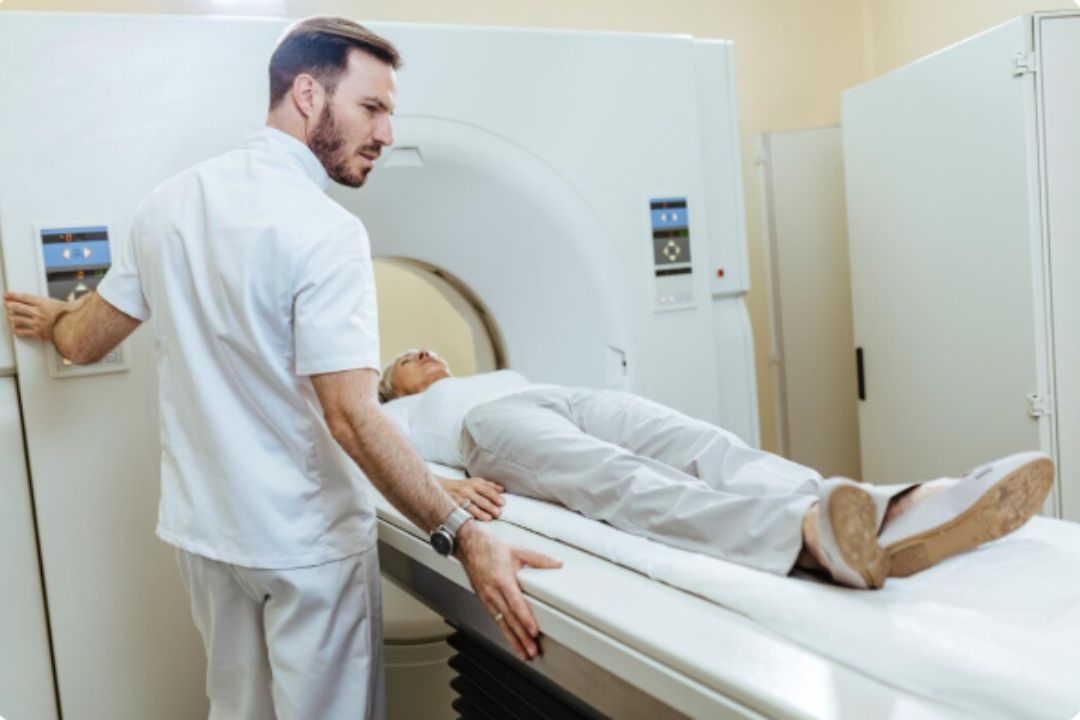
Comfort: The idea of an MRI machine can be daunting. You'll lie on a table that slides into a tubular magnet. The machine is noisy (you'll get earplugs or headphones). The key is to stay perfectly still for 30-45 minutes. If you have claustrophobia, discuss options with your facility; many offer open MRI machines or sedation for anxiety. It’s a non-invasive and painless procedure.

Finding a Scan and Preparing: Use phrases like "MRI near me" or "diagnostic imaging center" to find accredited facilities. Wear comfortable, metal-free clothing. You must remove all metal objects. Inform your technologist of any implants or possible pregnancy.

why choose diagnopein

Ignoring persistent shoulder pain can lead to worsening injury and longer recovery times. When conservative measures fail, advanced imaging like an MRI provides the clear, detailed answers needed for an accurate treatment plan.

At Diagnopein, we believe the diagnostic journey should be clear, supportive, and efficient. We are more than just a directory; we are your partner in navigating the path to precise diagnosis and lasting health. Here’s why thousands choose us:

1. Unmatched Clarity & Guidance:
The world of medical imaging can be confusing. We cut through the complexity. Our platform and resources—like this blog—empower you with straightforward information on procedures, costs, and what to expect, so you can make informed decisions with confidence.

2. Seamless Access to Top-Tier Imaging:
Don’t just search "MRI near me" and hope for the best. Diagnopein has carefully vetted a network of accredited imaging centers equipped with the latest high-field MRI machine and CT scan technology. We connect you directly to facilities known for quality, accuracy, and patient care.

3. A Frictionless, Patient-Centric Experience:
We streamline the entire process. From helping you understand your doctor’s referral to comparing facility options, scheduling appointments, and clarifying insurance questions—we handle the logistics. We prioritize your comfort, helping you find centers that offer open MRI options or compassionate care for anxious patients.

4. Expertise You Can Trust:
Our focus is solely on diagnostic imaging. Our deep expertise ensures we ask the right questions and guide you to the most appropriate scan, whether it’s a detailed MRI scan for soft tissue or a quick CT scan vs MRI comparison for your specific condition. We help ensure the right test is done the first time.

Conclusion: From Diagnosis to Recovery with Diagnopein

Ignoring persistent shoulder pain can lead to worsening injury and longer recovery times. When conservative measures fail, advanced imaging like an MRI provides the clear, detailed answers needed for an accurate treatment plan.

At Diagnopein, we understand that your journey to recovery starts with precise diagnosis. We connect patients with trusted, high-quality imaging centers equipped with the latest technology. If you’re experiencing the warning signs, don’t ignore them. Consult with your physician about the need for a shoulder MRI.

Talk to an Expert
  I HereBy Consent to receive calls/messagess from Diagnopein mri Scan and its partners and override DND settings
LATEST POST
SIMILAR POST