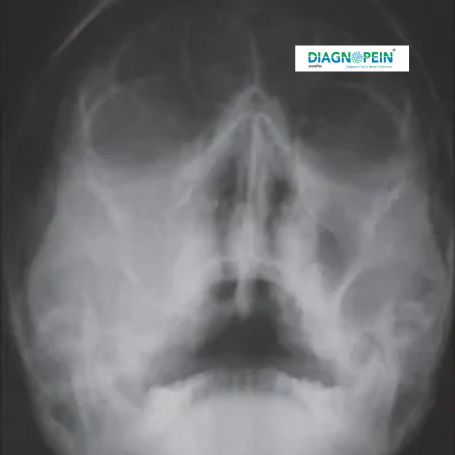
Why CT PNS Placement Is Important
Proper CT PNS placement during scanning ensures correct visualization of the sinuses and nasal pathways. The patient’s head is carefully positioned to capture optimal axial and coronal sinus planes. This positioning allows radiologists to evaluate even subtle abnormalities in the ethmoid, maxillary, sphenoid, and frontal sinuses.
Inaccurate placement can lead to incomplete imaging, blurred sections, or wrong diagnosis. At Diagnopein Nashik, experienced radiology technicians follow international CT PNS positioning protocols. The goal is to ensure clear diagnostic images for accurate clinical interpretations, improving treatment success rates.
A well-positioned CT PNS scan helps in:
-
Identifying infection spread or abscess formation
-
Planning sinus surgery or FESS (Functional Endoscopic Sinus Surgery)
-
Localizing sinus blockages or bone deformities
-
Monitoring sinus healing post-treatment
Benefits of CT PNS Scan
A CT PNS scan offers several advantages for ENT and general health evaluation.
Key benefits include:
-
High diagnostic accuracy: The scan captures intricate internal details of bones, soft tissue, and air-filled sinus cavities.
-
Early detection: Identifies sinus infections, mucosal thickening, cysts, and blockages before they worsen.
-
Quick and non-invasive: The test typically takes less than 10 minutes, with no discomfort during the process.
-
3D visualization: Allows doctors to see cross-sectional and 3D reconstructed images for better analysis.
-
Pre-surgical guidance: Essential for sinus surgery planning to minimize complications.
By performing CT PNS at Diagnopein Nashik, patients benefit from state-of-the-art scanners, radiation safety measures, and precise reporting by skilled radiologists.
How CT PNS Testing Is Done
Step-by-step CT PNS procedure:
-
Preparation: No special preparation is usually required. Remove metallic objects before the scan.
-
Positioning: The patient lies on a CT table; the technician adjusts head position to cover sinuses accurately.
-
Scanning: The CT machine rotates around the head to capture detailed sinus images in minutes.
-
Data analysis: Images are processed digitally and reviewed by Diagnopein’s radiology expert.
-
Report: A detailed interpretation report is shared with the referring doctor or ENT specialist.
Safety: The radiation dose in CT PNS is minimal and well within safe limits. Pregnant women should inform the technician before testing.
CT PNS Scan Parameters
Typical CT PNS parameters followed at Diagnopein Nashik include:
-
Slice thickness: 0.5–1 mm for fine anatomical detailing
-
Scan mode: Axial with coronal and sagittal reconstructions
-
Contrast: Usually not required (non-contrast PNS scan)
-
Duration: 5–8 minutes
-
Output: Digital and printed image copies with detailed radiologist report
Our advanced Philips and Siemens CT scanners ensure unmatched image clarity, reduced noise, and faster image reconstruction to support precise ENT analysis.
Why Choose Diagnopein Nashik for CT PNS Scan
-
Advanced multi-slice CT scanners for high-resolution sinus imaging
-
Experienced radiologists and ENT-supportive reporting
-
Affordable scan pricing with same-day report delivery
-
Hygienic and patient-friendly diagnostic environment
-
Assistance with doctor consultation and further ENT care guidance
Get your CT PNS scan in Nashik at Diagnopein Diagnostic Center to detect sinus disorders early and receive accurate evaluations for faster recovery.