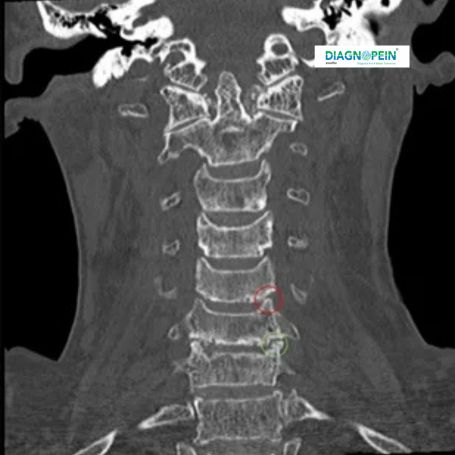
Importance of CT Brain (Plain)
A CT Brain (Plain) scan plays a critical role in diagnosing head injuries, sudden headaches, strokes, infections, and structural irregularities. It helps doctors determine the severity of brain trauma, detect hemorrhages, or locate tumors at an early stage. In emergency settings, this scan is preferred because it is fast, accurate, and available round the clock.
In cases of neurological conditions such as seizures, dizziness, or loss of balance, a CT scan offers essential information that helps guide treatment decisions. It is also vital before surgical planning or after accidents to assess brain integrity.
Some patients might also undergo CT Cervical Spine, CT Cervical, or CT C Spine along with CT Brain (Plain)—especially in trauma cases—since these scans show both soft tissue and bone damage in the neck region.
Benefits of CT Brain (Plain)
-
Rapid and non-invasive procedure
-
No hospitalization required
-
High-quality cross-sectional imaging of the brain
-
Helps detect stroke, tumors, fractures, and bleeding quickly
-
Essential for patients with head injury or neurological symptoms
-
Detects subtle brain anomalies that may not appear on X-rays
In Nashik, Diagnopein Diagnostic Center ensures patient comfort and safety while delivering accurate CT Brain scan results that help neurologists form a timely diagnosis. Combined imaging such as CT Cervical Spine without contrast or CT Cervical Spine with contrast may be suggested to assess additional spinal or vascular abnormalities based on indication.
CT Brain (Plain) Testing Procedure
The procedure for CT Brain (Plain) is simple and takes approximately 10–15 minutes:
-
The patient lies on a motorized table that slides into the CT scanner.
-
No injection or contrast material is used for the plain study.
-
The scanner captures multiple cross-sectional images of the brain.
-
These images are processed by advanced software to form a 3D view.
-
A radiologist reviews the images to detect any abnormalities.
No special preparation is needed for the test, although patients are advised to remove metallic objects from their head and neck region before scanning. The scan is safe, painless, and uses minimal radiation exposure.
Parameters and Reports
The CT Brain (Plain) scan measures parameters such as brain tissue density, presence of hemorrhage, infarction, brain edema, bone integrity, ventricular system structure, and midline shift. Radiologists analyze these parameters to identify specific conditions and prepare a detailed report, typically available within a few hours at Diagnopein Nashik.
In cases involving trauma or neurological symptoms extending to the neck, radiologists may recommend a CT scan cervical spine. This test helps evaluate fractures, ligament injuries, or degenerative changes. For deeper assessment, CT Cervical Spine Indications may include neck pain, chronic stiffness, or post-traumatic injuries.
A CT scan cervical spine shows spinal cord, discs, vertebrae, and surrounding soft tissues in high detail, helping physicians identify areas of compression, degeneration, or trauma.
Why Choose Diagnopein Nashik?
At Diagnopein, all CT scans are performed using modern, multi-slice CT scanners operated by skilled radiology professionals. The center prioritizes patient comfort, quality imaging, and fast reporting.
-
Highly accurate diagnostic imaging
-
Experienced radiologists and technicians
-
Minimal waiting time
-
Affordable pricing for CT Brain and CT Cervical Spine scans
-
Convenient location and online booking facility