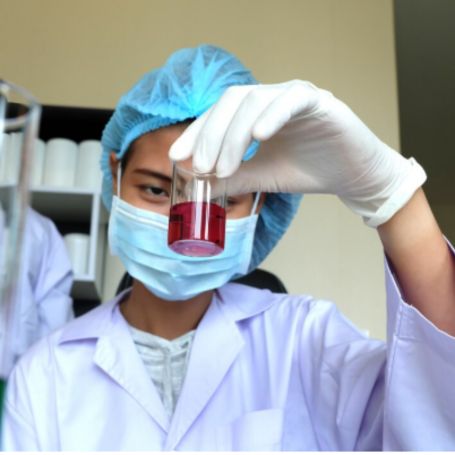


The LDH–Pleural Fluid test is essential in evaluating pleural effusion and guiding treatment. Its importance lies in:
The test helps distinguish transudate from exudate using Light’s Criteria:
Transudative effusion: Low LDH, usually due to heart failure or liver disease.
Exudative effusion: High LDH, often linked to infections, malignancy, or inflammation.
Detecting Cellular Damage and Inflammation
Elevated LDH levels in pleural fluid indicate cellular injury, helping diagnose:
Pneumonia
Tuberculosis
Lung cancer
Autoimmune or inflammatory diseases
Early detection of pleural diseases prevents complications such as:
Respiratory distress
Chronic pleural effusions
Empyema
Doctors rely on pleural fluid LDH values to decide on:
Antibiotic therapy
Anti-tuberculosis treatment
Thoracentesis or drainage
Further imaging or biopsy
Choosing Nashik Diagnopein Centre ensures reliable and accurate pleural fluid analysis. Benefits include:
We use modern enzymatic methods to precisely measureLDH in pleural fluid, ensuring accurate detection of exudative and transudative effusions.
High LDH levels help identify:
Tuberculosis
Pneumonia
Malignancy
Inflammatory pleural diseases
Our pleural fluid LDH testing provides fast results, helping doctors make timely treatment decisions.
We provide cost-effective LDH pleural fluid testing in Nashik, making advanced diagnostics accessible to everyone.
We evaluate LDH levels alongside serum LDH, pleural protein, glucose, pH, and cell count to ensure complete diagnosis.
Nashik Diagnopein Centre has a team of skilled technicians and modern lab equipment to deliver accurate pleural fluid test results.
The LDH–Pleural Fluid test requires a pleural fluid sample, obtained through thoracentesis. Our expert team ensures the procedure is safe, hygienic, and minimally uncomfortable.
Clinical Evaluation – Doctors assess symptoms and review chest imaging.
Thoracentesis (Fluid Collection) – Sterile needle insertion collects pleural fluid.
Sample Transport – Fluid is sent to the lab in sterile containers.
Laboratory Analysis – LDH levels are measured using enzymatic methods.
Evaluation Using Light’s Criteria – Compares pleural LDH with serum LDH and protein.
Report Delivery – Detailed, accurate results are provided to the patient and doctor.
No special preparation is required. Patients should inform the lab about:
Blood thinners
Breathing difficulties
Existing lung conditions
The procedure is generally safe, quick, and causes only mild discomfort.
In addition to LDH, the pleural fluid test includes:
LDH (Pleural Fluid)
Serum LDH
Pleural Protein
Serum Protein
Glucose (Sugar) in Pleural Fluid
Cell Count
Appearance / Color
pH Measurement
ADA (Adenosine Deaminase) – for TB evaluation
These parameters help diagnose:
Exudative or transudative pleural effusions
Tuberculosis
Parapneumonic effusion
Malignancy
Heart or liver disease-related effusions
We use modern, automated analyzers and advanced testing methods to ensure precise and reliable results. Our lab strictly follows quality control and international standards.
Expert Technicians and Pathologists
Our team consists of experienced laboratory technologists and certified pathologists who interpret results with high accuracy, helping doctors make informed decisions.
Fast and Reliable Reporting
At Nashik Diagnopein Centre, we understand the importance of timely diagnosis. Our streamlined processes ensure quick sample processing and fast report delivery without compromising accuracy.
From routine blood tests to specialized investigations like LDH–Pleural Fluid, Immunoglobulin profiles, and Hormonal assays, we offer a comprehensive range of diagnostic services in Nashik.
Patient-Friendly Services
We prioritize comfort, affordability, and convenience for our patients. Our staff is trained to assist patients throughout the testing process, including guidance on preparation, collection, and interpretation.

If your LDH levels are abnormal, your healthcare provider will discuss the results with you and may recommend further testing or evaluations to determine the underlying cause of the pleural effusion.
There are generally no dietary restrictions before the LDH pleural fluid test. However, it is best to follow any specific instructions provided by your healthcare provider.
The test involves collecting pleural fluid through a procedure called thoracentesis, where a needle is inserted into the pleural space to obtain the fluid. The fluid is then sent to a laboratory for LDH level measurement.
The risks associated with thoracentesis include infection, bleeding, pneumothorax (collapsed lung), and discomfort at the needle insertion site. However, these complications are relatively rare.