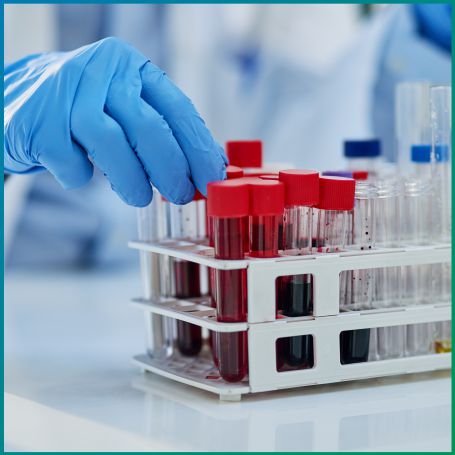
The Fibrinogen Degradation Products (FDP) Test measures fragments released during blood clot breakdown. It helps detect conditions like DIC, thrombosis, liver disease, and severe infections.


The Fibrinogen Degradation Products (FDP) test is an important blood investigation used to measure the fragments produced when fibrinogen and fibrin break down in the bloodstream. These fragments indicate whether excessive clotting or abnormal bleeding is happening inside the body. When blood clots form and dissolve, FDP levels increase. This makes the FDP test extremely useful in detecting conditions like DIC (Disseminated Intravascular Coagulation), deep vein thrombosis (DVT), pulmonary embolism, liver disease, trauma, and several clotting or bleeding disorders.
At Diagnopein Diagnostic, we provide precise and quick FDP testing using advanced laboratory technology, ensuring accurate results that support your doctor’s diagnosis.
The FDP test plays a vital role in understanding the clotting and bleeding activity inside the body. Abnormal FDP levels can indicate major health risks that require immediate diagnosis and treatment. Here’s why the test is considered essential:
High FDP levels may indicate conditions like DVT, pulmonary embolism, or clotting abnormalities. Early detection helps prevent complications such as heart attacks and strokes.
DIC is a life-threatening condition where uncontrolled clotting occurs, followed by severe bleeding. FDP levels help doctors identify and monitor DIC at the earliest stage.
Pregnant women with abnormal bleeding, placental separation, or high-risk pregnancy issues may undergo FDP testing for early assessment.
Liver dysfunction can affect clotting factors, causing an increase in FDP levels. Similarly, major trauma or surgery may lead to excessive clot breakdown.
With the FDP test at Diagnopein, patients receive fast results so treatment decisions can be taken immediately.
Choosing Diagnopein for your FDP test ensures accuracy, convenience, and affordability. Here are the major benefits:
We use automated analyzers that detect even the smallest variations in FDP levels, ensuring accurate results.
Early identification of abnormal clotting or bleeding helps prevent life-threatening conditions such as DIC and thrombosis.
Useful for ongoing treatment monitoring
Patients under treatment for clotting disorders, liver issues, or severe infections benefit from FDP monitoring to track recovery.
Diagnopein maintains the highest testing standards at pocket-friendly prices, making healthcare accessible for everyone.
You can easily book your FDP blood test at Diagnopein centres in Pune, Mumbai, Nagpur, Nanded, Ahmednagar, karad, and Nashik.
Our Nashik Centre: Diagnopein Diagnostic Centre
The Fibrinogen Degradation Products (FDP) test is simple and requires only a small blood sample.
A trained phlebotomist draws a blood sample from a vein in the arm. The procedure is quick and does not require fasting.
The sample is analyzed using advanced clot-detection technology that measures the level of FDP fragments in the blood.
Reports are generated with high precision and delivered quickly through SMS, WhatsApp, or email.
No fasting or special preparation is needed unless instructed by your doctor.
The FDP test typically reports:
FDP Level (mg/L or µg/mL)
Clot breakdown activity
Presence of clotting or bleeding abnormalities
Doctors often recommend additional tests with FDP such as D-dimer, PT, aPTT, and fibrinogen levels for a complete clotting profile.
NABL-standard advanced labs
Affordable pricing with accurate results
Hygienic and safe sample collection
Skilled medical team
Fast reporting
Multiple centres including Diagnopein Nashik

FDP results help diagnose and monitor clotting disorders like DIC and thrombotic events. Elevated levels indicate increased clot formation and breakdown.
No, but both are related. FDP measures broader fibrin breakdown products, while D-dimer specifically measures a byproduct of clot breakdown. Both tests are often used together.
Results are typically available within a day, though timing may vary based on the laboratory's schedule.
No special preparation is required, but inform your healthcare provider of any medications you are taking, especially anticoagulants.