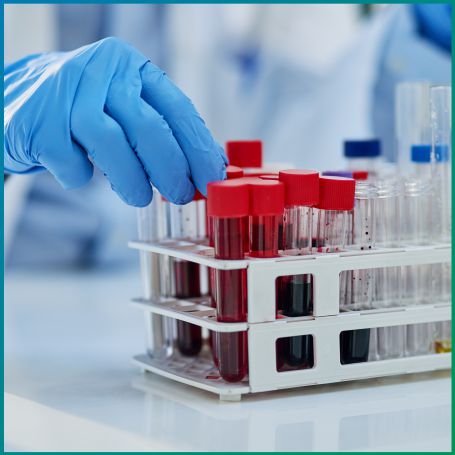
At Diagnopein Nashik, we provide high-quality lab testing for APTT, PT, PTT, and TT with accurate results. Our expert pathologists ensure you get

The APTT blood test (Activated Partial Thromboplastin Time) is a key test that evaluates your blood’s ability to form clots. It is often performed along with PT (Prothrombin Time) and TT (Thrombin Time) tests to get a complete picture of your coagulation system.
A high APTT indicates that your blood is taking longer than normal to clot. This may be due to:
Clotting factor deficiencies
Liver disorders
Vitamin K deficiency
Use of blood thinners like heparin
High APTT results need careful evaluation with other tests such as PT and TT, helping your doctor decide the best treatment plan.
APTT (Activated Partial Thromboplastin Time): Measures the intrinsic pathway of blood coagulation.
PT (Prothrombin Time): Evaluates the extrinsic pathway and is used to monitor warfarin therapy.
PTT (Partial Thromboplastin Time): Often similar to APTT, used to check for clotting disorders.
TT (Thrombin Time): Measures the final step of clot formation.
These tests are often done together as a coagulation profile to ensure a complete understanding of your blood’s clotting ability.
Early Detection of Bleeding Disorders: Identifies conditions like hemophilia.
Monitor Blood Thinners: Helps adjust doses of medications like heparin.
Pre-Surgery Safety: Ensures that you are at low risk of excessive bleeding during procedures.
Reliable and Safe: Simple blood sample with quick and precise lab results.
Blood Sample Collection: A trained phlebotomist draws a small blood sample from your arm.
Laboratory Analysis: The sample is analyzed for APTT, PT, PTT, and TT using advanced equipment.
Result Reporting: Results are evaluated by our experienced pathologists and shared promptly.
No special preparation is generally required, but your doctor may ask you to avoid certain medications before testing.
APTT: 30–40 seconds
PT: 11–13.5 seconds
TT: 14–19 seconds
Interpretation:
High APTT/PT: May indicate bleeding disorder or liver problem.
Low PT/PTT: Can suggest risk of clot formation.
Our specialists at Diagnopein Nashik provide clear guidance to help you understand your results.
Choosing the right diagnostic center is crucial for accurate results and reliable care. Here’s why Diagnopein Nashik stands out:
Advanced Laboratory Equipment: We use state-of-the-art machines for tests like APTT, PT, PTT, and TT to ensure precise results every time.
Expert Pathologists: Our experienced team of pathologists and lab technicians carefully analyzes each sample for accurate reporting.
Affordable Testing: We provide high-quality diagnostic services at reasonable prices, making healthcare accessible to everyone.
Quick and Reliable Reports: Get your test results promptly without compromising on quality.
Convenient Location: Our Nashik center is easy to reach, ensuring a hassle-free experience.
1. Patient Value
2. APTT, CONTROL

The APTT test is a simple blood test, and the risks are minimal. You may experience slight pain or bruising at the puncture site, but serious complications are rare.
No, fasting is not usually required for the APTT test. However, you should follow your doctor’s specific instructions regarding medications or other test preparations.
The APTT test is performed by drawing a small blood sample from a vein, usually in the arm. The blood is then analyzed in the lab to determine how long it takes to clot.
Yes, medications such as anticoagulants (heparin), aspirin, and certain antibiotics may affect the APTT test results. Inform your healthcare provider about any medications or supplements you are taking before the test.