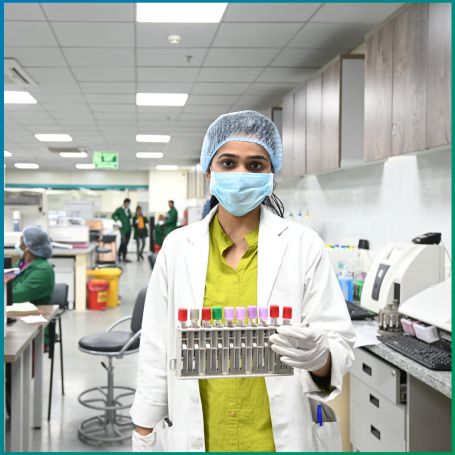
At Diagnopein, we offer precise AFB Sputum 2nd Day testing to support timely and reliable TB diagnosis

The AFB Sputum 2nd Day Test is a follow-up diagnostic test used to detect tuberculosis (TB) and other mycobacterial infections. It complements the AFB Sputum 1st Day Test, providing more accurate detection of acid-fast bacilli (AFB) in patients’ respiratory samples.
Collecting a second-day sputum sample increases the sensitivity of TB detection because mycobacteria may not appear in every sample. This test is particularly valuable for patients with persistent cough, fever, night sweats, or weight loss.
Why the AFB Sputum 2nd Day Test is Important
The AFB Sputum 2nd Day Test plays a key role in:
Confirming the presence of Mycobacterium tuberculosis after the first-day sample
Increasing diagnostic accuracy for patients with low bacterial loads
Supporting early treatment initiation for pulmonary TB
Guiding further tests such as AFB culture or drug sensitivity testing
Reducing the risk of false-negative results from the first-day sputum test
By performing the AFB Sputum 2nd Day Test, doctors can ensure a more reliable TB diagnosis, which is essential for effective treatment planning.
Benefits of AFB Sputum 2nd Day Testing
Higher Diagnostic Accuracy: Increases the chance of detecting TB bacteria.
Supports Follow-Up Testing: Complements the first-day sputum test to confirm results.
Non-Invasive Collection: Only requires a deep cough sputum sample.
Timely TB Detection: Helps start treatment early to prevent disease progression.
Guides Further Testing: Determines if AFB culture or drug sensitivity testing is necessary.
The AFB Sputum 2nd Day Test is a simple yet crucial step for confirming pulmonary TB.
How the AFB Sputum 2nd Day Test is Done
The process for the AFB Sputum 2nd Day Test is similar to the first-day test but focuses on improving sensitivity:
Sample Collection:
The patient provides a fresh morning sputum sample in a sterile container.
Instructions are given to ensure the sample comes from the lower respiratory tract.
Laboratory Processing:
The sample is smeared on a glass slide and stained using Ziehl-Neelsen or fluorescent staining techniques.
Microscopic examination is performed to detect acid-fast bacilli.
Reporting:
The results indicate the presence or absence of AFB.
If positive, doctors may recommend AFB culture or drug sensitivity testing for comprehensive evaluation.
Using both first- and second-day sputum samples improves TB detection rates significantly.
Parameters Measured
Presence of acid-fast bacilli (AFB) in sputum
Confirmation of Mycobacterium tuberculosis infection
Supports further tests like AFB culture and drug sensitivity testing
Accurate measurement ensures proper patient management and early intervention.
Who Should Get the AFB Sputum 2nd Day Test?
Doctors recommend the AFB Sputum 2nd Day Test for patients who:
Have persistent cough, fever, or weight loss
Show negative results on the first-day sputum test but still have TB symptoms
Require confirmation for pulmonary TB diagnosis
Need guidance for further testing like culture or drug sensitivity
Are part of TB screening programs or belong to high-risk groups
Early testing improves detection rates and ensures timely treatment.
Reliable AFB Sputum 2nd Day testing with accurate results
Affordable test price with transparent billing
Experienced microbiologists for precise interpretation
Safe and hygienic sample collection
Fast digital report delivery
Multiple centers across Pune, Mumbai, Nashik,Nanded, Nagpur, Ahmednagar, and Karad
At Diagnopein, we provide trusted, timely, and accurate TB diagnostic services to support proper treatment.
1. Method
2. Specimen
3. Ziehl Neelsen Stain
4. Pus Cells
5. Epithelial Cells

Sputum samples are stained and examined microscopically for the presence of acid-fast bacilli.
It's ideal to collect sputum early in the morning. Follow the lab's specific instructions for the best sample.
Typically, results are available within a few days, depending on laboratory processing times.
Collecting samples on two consecutive days increases the chances of detecting TB bacteria for accurate diagnosis.





