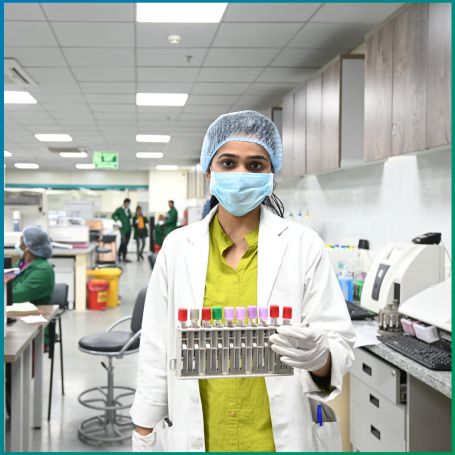
At Diagnopein, our AFB Mycobacterial Culture testing ensures precise detection of mycobacterial infections to guide effective treatment and monito

The AFB Mycobacterial Culture test is a specialized laboratory test used to detect Mycobacterium tuberculosis and other mycobacterial species in clinical samples. The test is highly recommended for patients suspected of having tuberculosis (TB) or non-tuberculous mycobacterial (NTM) infections. Unlike routine AFB smear tests, the AFB Mycobacterial Culture is the gold standard because it allows the growth, identification, and drug sensitivity testing of the bacteria, making it a crucial tool for accurate diagnosis.
Why the AFB Mycobacterial Culture Test is Important
The AFB Mycobacterial Culture test is important for several reasons:
Accurate Detection of TB: Confirms the presence of Mycobacterium tuberculosis even in low bacterial loads.
Identifies Non-Tuberculous Mycobacteria: Detects other mycobacterial infections that may mimic TB.
Drug Sensitivity Testing: Determines the most effective antibiotics for treatment.
Early Diagnosis: Provides reliable results for patients with persistent cough, fever, or weight loss.
Treatment Monitoring: Helps track the effectiveness of anti-TB therapy over time.
Performing the AFB Mycobacterial Culture is critical for preventing misdiagnosis and ensuring the correct course of treatment.
Benefits of AFB Mycobacterial Culture Testing
High Accuracy: Provides the most reliable confirmation of TB and other mycobacterial infections.
Drug Resistance Profiling: Detects resistant strains, helping doctors choose the correct medications.
Early Detection of Infection: Can identify infection before it becomes severe or spreads.
Comprehensive Results: Differentiates between Mycobacterium tuberculosis and non-tuberculous strains.
Supports Public Health: Early and accurate detection helps prevent TB transmission in the community.
The AFB Mycobacterial Culture test is essential for patients who require definitive diagnosis and effective management of mycobacterial infections.
How the AFB Mycobacterial Culture Test is Done
The AFB Mycobacterial Culture test is performed using patient samples such as sputum, bronchoalveolar lavage (BAL), urine, body fluids, or tissue biopsies. The process includes:
Sample Collection:
Multiple samples may be collected over several days to increase accuracy.
Samples are collected under sterile conditions to avoid contamination.
Laboratory Processing:
Samples are decontaminated and prepared for culture.
The AFB Mycobacterial Culture uses specialized media that supports mycobacterial growth.
Incubation:
Cultures are incubated for several weeks since mycobacteria are slow-growing.
Growth is monitored, and colonies are analyzed microscopically.
Identification & Sensitivity Testing:
Once growth is detected, laboratory experts identify the species.
Drug susceptibility testing may be performed to guide therapy.
The AFB Mycobacterial Culture provides definitive diagnosis, unlike smears or X-rays, which may only suggest the possibility of infection.
Parameters Measured
Presence of Acid-Fast Bacilli (AFB): Confirms mycobacterial infection
Species Identification: Determines whether it is Mycobacterium tuberculosis or another NTM
Drug Sensitivity: Helps doctors choose the most effective antibiotic therapy
Accurate interpretation of the AFB Mycobacterial Culture is vital for proper treatment planning and monitoring.
Who Should Get the AFB Mycobacterial Culture Test?
Doctors may recommend an AFB Mycobacterial Culture for patients who:
Have persistent cough, fever, night sweats, or weight loss
Show signs of TB but have negative AFB smear tests
Are immunocompromised (e.g., HIV, diabetes, chronic illness)
Require monitoring of anti-TB treatment
May have non-tuberculous mycobacterial infections
Early testing allows timely treatment and helps prevent the spread of TB in the community.
Reliable and accurate AFB Mycobacterial Culture testing
Affordable AFB Mycobacterial Culture test price
Experienced microbiologists for precise interpretation
Safe and hygienic sample collection
Quick digital report delivery
Convenient locations across Pune, Mumbai, Nanded,Nashik, Nagpur, Ahmednagar, and Karad
At Diagnopein, we prioritize trustworthy, timely, and accurate AFB Mycobacterial Culture testing for all patients.
1. Culture Method
2. Sample
3. Colony Count
4. Organism(s) Isolated
5. Culture Report: Culture yields growth of
6. Culture isolated after 7 days :
7. Culture isolated after 14 days:
8. Culture isolated after 21 days:
9. Ampicillin
10. Amikacin
11. Amoxicillin clavulanate
12. cefoperazon+sulbactam
13. Cefuroxime
14. Cefepime
15. Cefotaxime
16. Ciprofloxacin
17. Ertapenem
18. Gentamicin
19. Imipenem
20. Meropenem
21. Norfloxacin
22. Nitrofurantoin
23. Piperacillin-tazobactam
24. Trimethoprim-Sulfamethoxazole (Cotrimoxazole)

The test primarily detects tuberculosis (TB) but can also identify other mycobacterial infections, such as non-tuberculous mycobacteria (NTM), which can cause lung infections and skin diseases.
A sample (usually sputum or fluid) is collected from the patient and sent to a lab where it's cultured. It may take several weeks for mycobacteria to grow in the culture, after which they are identified and tested for drug sensitivity.
Since mycobacteria grow slowly, it may take anywhere from 2 to 8 weeks to get conclusive results from an AFB culture.
The AFB culture test is a laboratory test that detects the presence of Mycobacterium tuberculosis and other mycobacteria in samples like sputum, blood, or tissue by growing them in a special culture medium.