Diagnopein offers reliable India Ink Preparation testing in Karad for early detection of Cryptococcus infection in cerebrospinal fluid using advanced microscopy and expert pathologists.


India Ink Preparation is a widely used diagnostic technique in microbiology and pathology labs for the detection of encapsulated fungi, especially Cryptococcus neoformans. This test is crucial for identifying fungal infections that can cause serious conditions like meningitis, particularly in immunocompromised individuals. The procedure involves mixing a sample of cerebrospinal fluid (CSF) with India ink to visualize the capsule of the yeast under a microscope. The black ink creates a stark contrast, making the transparent capsule around the fungus clearly visible. At Diagnopein in Karad, the test is performed using advanced microscopy tools to ensure accurate and early detection of fungal infections, which is essential for timely medical intervention.
The India Ink Preparation test is highly important for diagnosing infections of the central nervous system (CNS), such as cryptococcal meningitis. Early identification of Cryptococcus neoformans through this method allows healthcare providers to start antifungal therapy immediately, which can prevent severe complications and improve patient outcomes. The test is rapid, cost-effective, and does not require complex molecular or culture-based techniques, making it a preferred initial diagnostic tool in many pathology laboratories. For patients with HIV/AIDS or other immunocompromised conditions, timely screening using India Ink stain can be life-saving. The accuracy and affordability of the test make it a valuable asset in both hospital and outpatient settings.
The India Ink Preparation test offers several clinical and diagnostic benefits:
Rapid and direct detection of Cryptococcus neoformans in biological samples like cerebrospinal fluid (CSF).
Cost-efficient compared to culture or antigen detection tests.
Enables immediate visualization, helping clinicians make fast and informed treatment decisions.
Can be performed on small sample volumes, ideal for patients in critical conditions.
Supports early fungal infection diagnosis in both hospital and outpatient settings.
At Diagnopein in Karad, the test is conducted under strict laboratory protocols to ensure reliability, precision, and patient safety. The use of India Ink stain for Cryptococcus detection is a trusted method for accurate results.
The India Ink Preparation procedure involves preparing a microscopic wet mount using India ink and a cerebrospinal fluid (CSF) sample. Here is the step-by-step process:
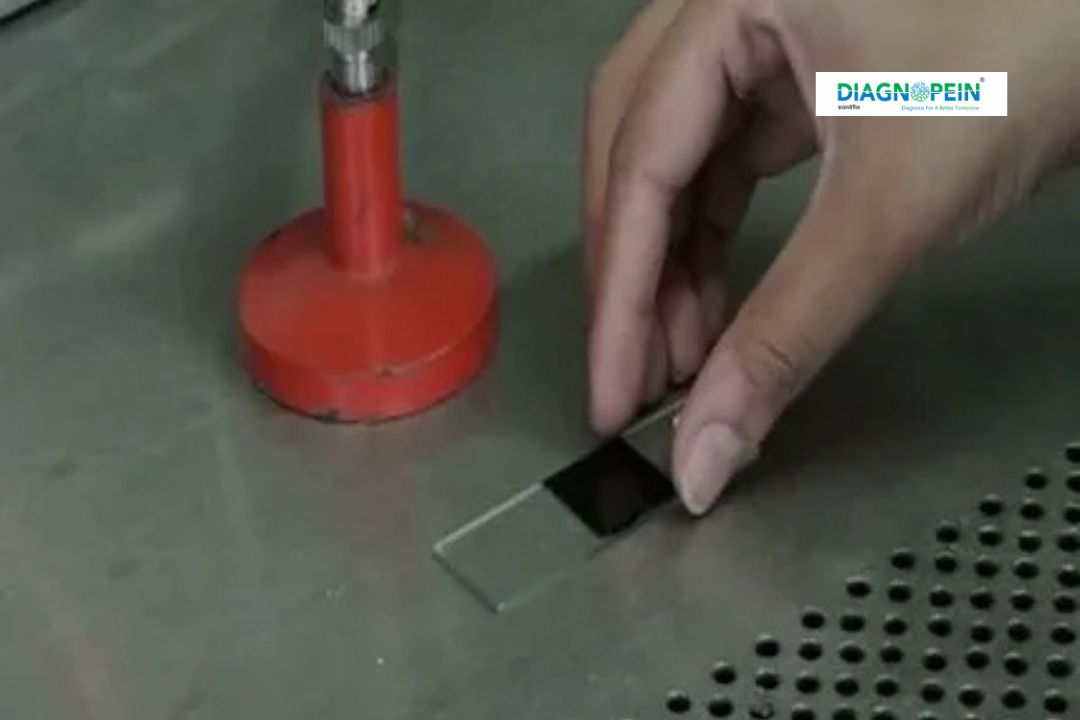
A small drop of CSF is placed on a clean glass slide.
An equal drop of India ink stain is added and gently mixed.
A coverslip is placed on top, avoiding air bubbles.
The slide is examined under a microscope using the high-power objective.
The presence of a clear halo around the yeast cell indicates a positive result for Cryptococcus neoformans.
Parameters evaluated:
Appearance of encapsulated yeast cells
Halo formation around fungal cells
Sample type: Cerebrospinal fluid (CSF), sometimes sputum or other fluids
At Diagnopein, all tests are performed by experienced technicians using high-quality stains and precision microscopes, ensuring dependable diagnostic accuracy. The India Ink stain for Cryptococcus detection is a reliable method for early diagnosis and effective treatment.
Advanced diagnostic technology and expert pathologists.
Swift reporting to assist prompt clinical decisions.
High accuracy in fungal detection with India Ink Preparation.
Patient-friendly service and quality-focused laboratory standards.
Trusted by doctors and hospitals across Karad for reliable microbiological testing.

This test is recommended for patients suspected of having cryptococcal infections, especially those with compromised immune systems or symptoms of meningitis.
The India ink particles are too large to penetrate the cryptococcal capsule, resulting in a visible clear halo around the fungal cell in a dark background, allowing easy identification.
The principle involves using India ink to create a dark background that makes the capsules of certain organisms, like Cryptococcus, appear as clear halos around the cells, aiding in identification.
The test is most specific to detecting Cryptococcus species due to their encapsulated structure, which is readily visible with this method.
The test itself is non-invasive and does not affect the patient directly, but the lumbar puncture used to collect CSF may have associated risks such as mild back pain or headaches.