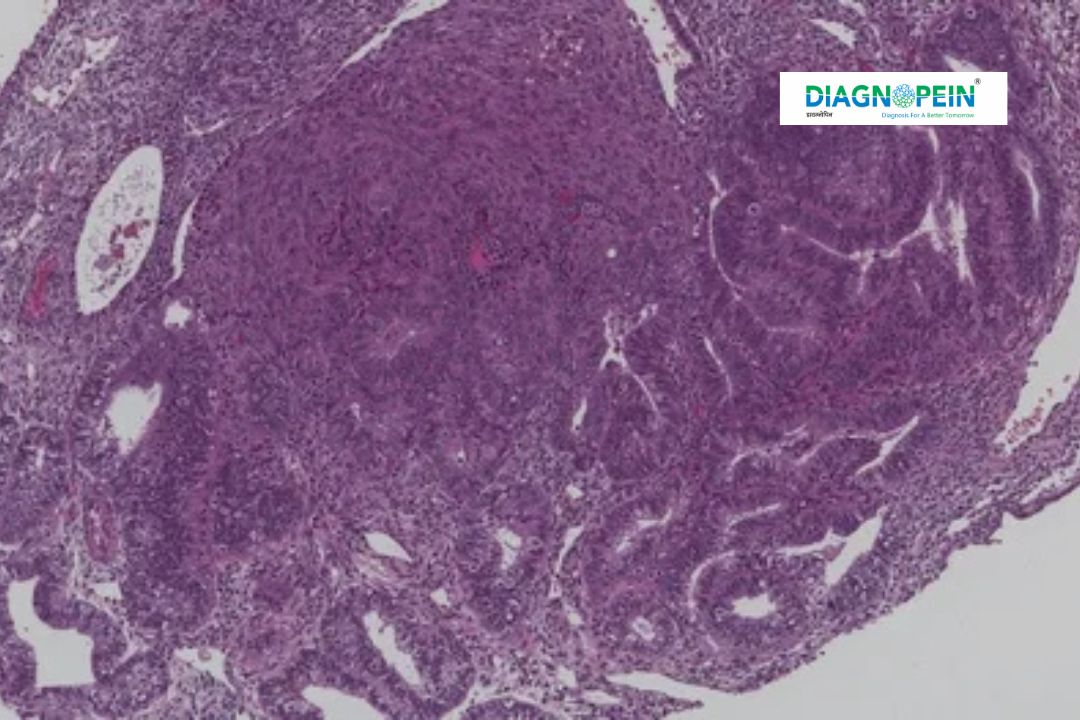
Get accurate HPE Endometrium Sample testing in Karad with Diagnopein. Our expert pathologists provide reliable histopathology reports to diagnose uterine and hormonal conditions effectively.


HPE Endometrium Sample (Histopathological Examination of Endometrium) is a diagnostic test used to study the tissue lining of the uterus, known as the endometrium. This test helps identify various uterine conditions like hormonal imbalance, infertility, abnormal bleeding, endometrial hyperplasia, or cancerous changes.
At Diagnopein, the HPE Endometrium Sample test in Karad is conducted by expert pathologists using advanced laboratory techniques. It provides detailed information about endometrial structure, cell type, and any abnormal growth, helping doctors plan effective treatment strategies for women’s reproductive health.
The HPE Endometrium Sample test plays a vital role in women’s health diagnosis. It is often recommended by gynecologists to:
Detect hormonal irregularities affecting the menstrual cycle.
Diagnose underlying causes of infertility or recurrent miscarriage.
Identify abnormal uterine bleeding or irregular menstrual patterns.
Detect endometrial hyperplasia (thickening of the lining) or early-stage cancer.
Assess the response of endometrial tissue to hormone therapy.
This test gives an accurate view of the cellular structure, helping differentiate between benign and malignant conditions, ensuring timely diagnosis and treatment.
Choosing the HPE Endometrium Sample test in Karad through Diagnopein offers several advantages:
Reliable Diagnosis: Provides microscopic tissue analysis, offering high accuracy.
Comprehensive Screening: Detects a wide range of endometrial and hormonal disorders.
Early Detection: Identifies abnormalities before they develop into severe conditions.
Personalized Treatment: Helps doctors customize treatment based on tissue response.
Expert Evaluation: Conducted by skilled pathologists using modern lab equipment.
With a timely endometrial biopsy, women can receive proper medical attention and treatment, avoiding complications arising from delayed diagnosis.
The HPE Endometrium Sample test involves collecting a small tissue sample from the uterus.
The gynecologist performs an endometrial biopsy during an outpatient visit.
The tissue sample is preserved and sent to Diagnopein’s pathology lab.
Pathologists process the specimen using specialized staining and microscopic evaluation.
A detailed histopathology report is then generated to help your doctor interpret the findings.
The procedure is usually safe, minimally invasive, and performed under sterile conditions to ensure patient comfort.
The examination focuses on multiple parameters, including:
Glandular and stromal structure.
Cellular morphology and proliferation.
Presence of inflammation or infection.
Hormonal phase determination (proliferative or secretory).
Detection of hyperplasia, atypia, or malignancy.
At Diagnopein, quality and accuracy are our top priorities. Choosing us for your HPE Endometrium Sample test ensures:
Modern histopathology laboratory with advanced equipment.
Experienced pathologists specializing in reproductive health.
Quick turnaround time for reports.
Affordable test packages in Karad.
Expert consultation for accurate medical interpretation.

Patients may be advised to avoid certain medications (like blood thinners) and to schedule the test during the first half of the menstrual cycle for optimal results.
Risks include mild discomfort, infection, and, although rare, potential perforation of the uterine wall.
While some discomfort is normal, severe pain is not. If you have concerns, discuss pain management options with your healthcare provider prior to the test.
The test is typically performed to investigate abnormal uterine bleeding, assess infertility, evaluate postmenopausal bleeding, monitor known endometrial conditions, and rule out endometrial cancer.