Diagnopein in Karad offers precise Gram Stain–Peritoneal Fluid testing to identify bacterial infections in the abdominal cavity, ensuring fast and reliable clinical results for effective trea


The Gram Stain–Peritoneal Fluid test is a diagnostic procedure used to detect bacterial presence in the peritoneal fluid — the liquid that surrounds abdominal organs. This test helps clinicians identify infections such as peritonitis, appendicitis-related abscesses, or complications arising after abdominal surgery. By staining the fluid sample, laboratory professionals can differentiate between Gram-positive and Gram-negative bacteria based on their cell wall characteristics.
At Diagnopein Laboratory in Karad, this analysis is performed using high-standard microbiological techniques to ensure precise and early detection. Early diagnosis through Gram staining can significantly aid in choosing the right antibiotic therapy before culture results are available, speeding up patient recovery.
Peritoneal infections can lead to serious health risks if not diagnosed promptly. The Gram Stain–Peritoneal Fluid test plays a critical role in:
Identifying bacterial contamination in the peritoneal cavity.
Supporting physicians in differentiating between bacterial and non-bacterial causes of abdominal pain and inflammation.
Providing preliminary results faster than culture-based tests, allowing for early medical intervention.
Helping in postoperative monitoring for complications or hospital-acquired infections.
In medical emergencies, such as suspected peritonitis, this test is often the first diagnostic step. In Karad, Diagnopein is trusted by physicians for quick, dependable results that enable faster treatment decisions.
The key benefits of this test include:
Rapid results: Offers same-day reporting for quicker diagnosis.
Antibiotic guidance: Assists doctors in prescribing the most effective antibiotics.
Infection control: Detects bacterial contamination before it spreads systemically.
Cost-effective: Reliable yet affordable diagnostic option suitable for all patient groups.
Supports advanced culture testing: Provides a preliminary microbial direction that helps culture and sensitivity tests yield more focused results.
Diagnopein Laboratory emphasizes accuracy and patient care, ensuring each peritoneal sample is handled under strict quality controls using updated Gram staining procedures.
The Gram Stain–Peritoneal Fluid test involves a detailed laboratory process that includes:
Sample Collection: Peritoneal fluid is collected aseptically using a sterile syringe during paracentesis (abdominal fluid aspiration).
Smear Preparation: A thin layer of the collected fluid is placed on a glass slide and air-dried.
Staining Procedure: The slide is stained with a sequence of reagents – crystal violet, iodine, alcohol (decolorizer), and safranin.
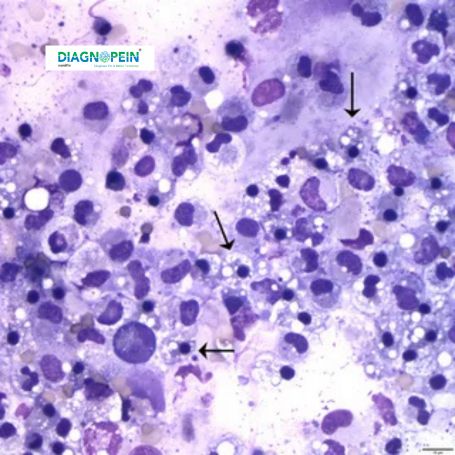
Microscopic Examination: The sample is examined under a microscope to identify bacterial morphology and classify organisms as Gram-positive (purple) or Gram-negative (pink).
Reporting: Results are reported along with any visible bacterial types, which guide further culture and antibiotic sensitivity studies.
At Diagnopein, each test follows standard biosafety and accuracy protocols, ensuring trustworthy results that help clinicians make timely decisions.
Key parameters observed include:
Color and clarity of peritoneal fluid.
Number and type of bacteria present.
Differentiation between cocci, bacilli, or mixed organisms.
Gram reaction (positive or negative).
Leukocyte presence indicating inflammatory or infectious process.
These findings assist in diagnosing infections such as spontaneous bacterial peritonitis (SBP), secondary peritonitis due to bowel perforations, or infections related to dialysis catheters.
Diagnopein Laboratory in Karad is equipped with advanced microbiology setups and skilled lab professionals committed to providing accurate diagnostic results. We ensure:
Timely reports reviewed by trained microbiologists.
Affordable pricing for all diagnostic packages.
Transparent service with easy access to online results.
Hygienic sample collection and patient-friendly testing experience.
Your health is our priority, and our Gram Stain–Peritoneal Fluid test ensures early detection for effective treatment management.

A negative result suggests that no bacteria were detected in the sample. However, it does not rule out infection, as some bacteria may be present in low quantities or may not stain effectively.
The test itself is generally safe. However, the procedure to collect peritoneal fluid (paracentesis) carries a small risk of bleeding, infection, or injury to internal organs. These risks are minimized when the procedure is performed by an experienced healthcare provider.
A positive result indicates the presence of bacteria in the peritoneal fluid, suggesting an infection, such as peritonitis. Further culture tests are needed to identify the specific bacteria and determine their antibiotic sensitivity.
Results are typically available within a few hours after the sample is processed in the laboratory.