Book a reliable Gram Stain – CSF test in Karad at Diagnopein to detect bacterial infections in the cerebrospinal fluid through quick and accurate microscopic examination.


The Gram Stain – CSF test is a vital diagnostic method used to detect bacterial infections in cerebrospinal fluid (CSF). Cerebrospinal fluid surrounds the brain and spinal cord, providing protection and nourishment. When infections like bacterial meningitis or encephalitis are suspected, testing the CSF helps identify the underlying microorganism responsible for the infection.
At Diagnopein, our advanced diagnostic laboratory in Karad, we perform the Gram Stain CSF test using modern microscopy and staining techniques to ensure accuracy and reliability. The test differentiates bacteria into two major categories — Gram-positive and Gram-negative — based on cell wall properties, crucial for guiding effective treatment decisions.
The Gram Stain – CSF test plays a vital role in diagnosing life-threatening infections affecting the central nervous system. Identifying whether the infection is caused by Gram-positive or Gram-negative bacteria helps doctors start targeted antibiotic therapy quickly, improving patient recovery rates.
In cases of meningitis, meningococcal infection, or bacterial sepsis, early detection through Gram staining can prevent irreversible neurological damage. Since CSF infections can progress rapidly, prompt examination is critical to ensure the correct medical management. Diagnopein ensures rapid sample processing to deliver quick results without compromising accuracy, supporting emergency clinical care.
The Gram Stain – CSF test offers several significant benefits:
Rapid preliminary identification of bacterial organisms before culture results.
Helps differentiate bacterial meningitis from viral infections.
Facilitates timely selection of suitable antibiotics.
Aids in monitoring treatment effectiveness and infection clearance.
Minimally invasive when performed along with lumbar puncture by experienced clinicians.
At Diagnopein Karad, we employ trained microbiologists and high-quality reagents to produce consistent, accurate findings that assist physicians in making informed decisions.
The Gram Stain – CSF test involves careful microscopic examination of cerebrospinal fluid obtained via lumbar puncture (spinal tap). The process includes:
Collection of a CSF sample under sterile conditions.
Preparation of a thin smear on a glass slide.
Application of Gram’s staining reagents — crystal violet, iodine, alcohol (decolorizer), and safranin.
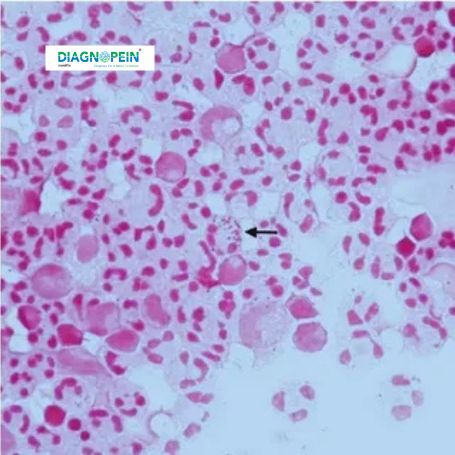
Microscopic observation to identify bacterial presence, shape (cocci or bacilli), and Gram reaction (positive or negative).
Parameters observed:
Bacterial morphology and arrangement
Gram-positive or Gram-negative reaction
Presence of white blood cells (indicating infection)
Overall clarity and color of CSF sample
The entire process is completed swiftly, making Gram staining one of the most efficient diagnostic tools for detecting bacterial infections of the CSF. Results help doctors begin appropriate antibiotic treatment immediately, even before culture confirmation.
Diagnopein stands out as one of the most trusted diagnostic centers in Karad, offering advanced laboratory services, timely reports, and expert microbiological analysis. We focus on patient safety, maintaining sterile conditions, and ensuring accurate results delivered with care. Whether you need urgent infection screening or detailed CSF analysis, our state-of-the-art facility ensures dependable outcomes.

The Gram Stain test itself is risk-free. However, the procedure to collect the CSF (lumbar puncture) carries some risks, such as mild discomfort, headache, or, in rare cases, infection or bleeding. These risks are minimized by skilled healthcare providers.
A negative result suggests that no bacteria were detected in the CSF sample. However, it does not completely rule out infection, as some bacteria may be present in small quantities or may not retain the Gram stain effectively.
Gram Stain results are typically available within a few hours after the sample is processed in the laboratory.
A positive result means that bacteria are present in the cerebrospinal fluid, suggesting an infection such as bacterial meningitis or encephalitis. Further testing (such as culture) is needed to identify the specific bacteria and determine their sensitivity to antibiotics.





