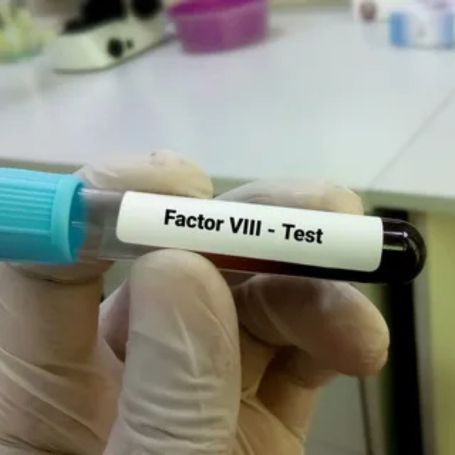
The Factor VIII Assay Test measures the amount and activity of Factor VIII, a key clotting protein that prevents excessive bleeding. It is crucial for diagnosing


Report Availability
24 hours
The Factor VIII Assay is a specialized blood test used to measure the level of Factor VIII, a crucial protein involved in blood clotting. This protein plays an essential role in the coagulation cascade, helping your body form stable blood clots to prevent excessive bleeding.
Testing for Factor VIII activity is vital for diagnosing and monitoring bleeding disorders such as Hemophilia A or acquired Factor VIII deficiency. The test helps doctors understand whether the bleeding tendency is due to insufficient production or the presence of inhibitors that reduce protein activity.
The Factor VIII Assay test is important because even a slight deficiency in this protein can cause serious bleeding complications. Regular monitoring of Factor VIII is essential for individuals with known bleeding disorders or those undergoing replacement therapy.
A doctor may recommend this test if you experience frequent nosebleeds, prolonged bleeding after injury or surgery, unexplained bruises, or have a family history of hemophilia. This test also assists in assessing the effectiveness of Factor VIII replacement therapy and checking for development of inhibitors that may interfere with treatment.
Conducting the Factor VIII blood test early can help prevent serious complications through timely diagnosis and personalized treatment planning.
Undergoing a Factor VIII Assay offers several important benefits:
Accurate diagnosis of bleeding and clotting disorders.
Helps in early detection of Hemophilia A and its severity.
Monitors treatment progress and assesses factor replacement therapy effectiveness.
Ensures personalized treatment and risk management for patients with bleeding tendencies.
Useful in preoperative screening for those with unexplained bleeding history.
At Diagnopein, our high-quality diagnostic approach ensures precise results for the Factor VIII activity test, empowering both patients and healthcare professionals with confidence in every outcome.
The Factor VIII Assay test requires a venous blood sample, typically collected from your arm. The procedure is quick, minimally invasive, and performed under sterile laboratory conditions. Once collected, the sample undergoes analysis to measure the Factor VIII activity level, expressed as a percentage compared to normal plasma levels.
Usually, normal Factor VIII activity ranges between 50% to 150%. Low levels may indicate Hemophilia A, acquired deficiencies, or liver disease, whereas high levels can sometimes occur during inflammation, pregnancy, or stress.
The turnaround time for Factor VIII Test results is generally within 24–48 hours. Our expert hematologists and lab technologists carefully interpret your results alongside clinical findings for a complete diagnostic report.
Advanced technology for precise clotting factor analysis
Strict quality control and result accuracy
Expert pathologists and hematologists
Easy home sample collection and online reporting facility
Patient-centric, transparent billing and services
Choosing Diagnopein ensures dependable diagnostic support, seamless communication with healthcare providers, and quick result turnaround to guide effective treatment management.

Symptoms that may prompt a Factor VIII assay test include Frequent, unexplained bruising. Prolonged bleeding after injury, surgery, or dental procedures. Spontaneous bleeding in joints, muscles, or soft tissues. Family history of hemophilia or other bleeding disorders.
The test involves a simple blood draw from a vein, typically from the arm. The blood sample is then sent to a laboratory for analysis, where the activity of Factor VIII is measured. The procedure itself takes only a few minutes, but results may take a few days to be processed.
No, fasting is not required for the Factor VIII assay test. However, your healthcare provider may give specific instructions based on your overall health and other tests you may be undergoing simultaneously.
Yes, the Factor VIII assay test is safe. The most common side effects are mild discomfort at the site of the blood draw, such as bruising or soreness. Serious complications are extremely rare.