Why Regular MRI is Important
Regular MRI scans offer crucial benefits by providing high-resolution images that reveal subtle abnormalities undetectable by other imaging methods. These include tumors, neurological disorders, musculoskeletal injuries, and internal organ issues. MRI's ability to differentiate soft tissues with excellent contrast supports early disease detection and effective treatment interventions. Moreover, MRIs do not use ionizing radiation, making them safer for repeated use and vulnerable populations like children and pregnant women.
Benefits of Regular MRI
-
Non-invasive and Safe: No exposure to harmful radiation unlike X-rays or CT scans.
-
High-resolution Imaging: Provides detailed pictures of muscles, ligaments, brain tissue, and organs.
-
Early Disease Detection: Identifies abnormalities before symptoms appear, improving treatment outcomes.
-
Versatile Diagnostic Tool: Used for neurological conditions, orthopedic injuries, spinal problems, cardiovascular checks, and abdominal assessments.
-
Comfortable Procedure: Generally painless with quick result turnaround for timely medical decisions.
How to Do a Regular MRI Test
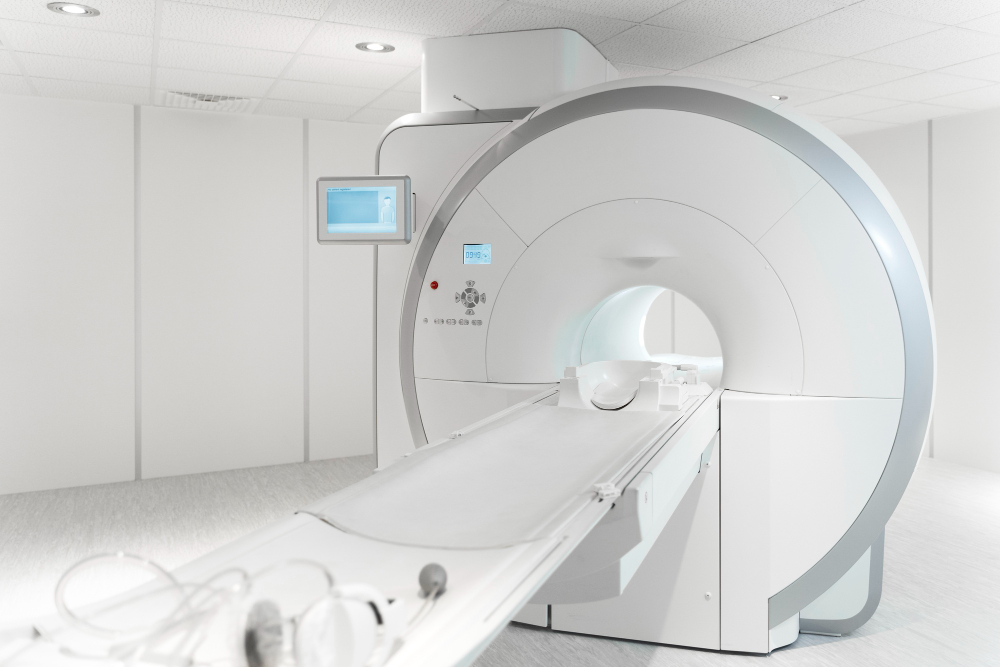
The MRI testing process is straightforward. Patients lie on a motorized table that slides into a large, cylindrical scanner. They must remain still during imaging to ensure clarity. The procedure typically lasts between 30 to 60 minutes depending on the area scanned. Contrast agents may be administered intravenously in some cases to highlight specific tissues. Our trained radiologists guide patients throughout to ensure comfort and safety.
Key MRI Parameters
Several imaging parameters influence MRI quality and diagnostic accuracy, including:
-
Repetition Time (TR): Time between successive pulse sequences applied to the same slice.
-
Echo Time (TE): Time between the delivery of the radiofrequency pulse and the receipt of the echo signal.
-
Flip Angle: Angle of the magnetic pulse used to excite protons.
-
Field Strength: Strength of the magnetic field in Tesla (commonly 1.5T or 3T).
-
Voxel Size: Resolution element defining the smallest unit of the image.
These parameters are customized per patient’s clinical needs to generate optimal images.
Why Choose Diagnopein for Regular MRI in Nanded
-
Advanced MRI Technology: State-of-the-art scanners delivering precise and clear images.
-
Expert Radiologists: Skilled professionals interpreting results for accurate diagnosis.
-
Patient-Centered Care: Comfortable, safe, and convenient testing environment.
-
Comprehensive Reporting: Fast and detailed medical reports for your healthcare provider.
-
Affordable Services: Competitive pricing and convenient appointments in Nanded.