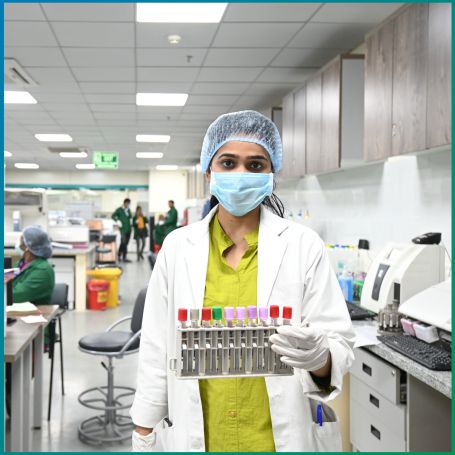
Histopathology is a branch of pathology that focuses on the examination of tissue samples under a microscope to detect abnormalities or disease processes.


The Histopathology Medium Test is a procedure that involves the analysis of tissue samples that are medium in size, typically taken from biopsies or surgical excisions. This type of test is crucial in diagnosing conditions like cancer, inflammation, infection, or other tissue-related diseases. By examining the tissue at the cellular level, pathologists can provide detailed information about the nature of a disease, its stage, and the potential treatment options.
1] Biopsy or Tissue Collection: The tissue sample is collected either through a biopsy (needle, punch, or excisional) or during surgery. The size of the sample will depend on the condition being investigated.
2] Fixation: The sample is preserved in a fixative solution (commonly formalin) to prevent degradation and maintain the tissue’s structure.
3] Processing: The fixed tissue is embedded in paraffin wax to create a block, which allows thin sections to be cut for examination.
4] Sectioning: Thin slices of the tissue block are cut using a microtome and placed on slides.
5] Staining: The slides are stained with specific dyes (e.g., Hematoxylin and Eosin) to highlight different cell structures and make abnormalities easier to detect.
6] Microscopic Examination: The pathologist examines the stained slides under a microscope to look for any signs of disease, abnormalities, or unusual cell patterns.
The results of the Histopathology Medium Test Nagpur are qualitative and descriptive. The pathologist will issue a report detailing:
1] Diagnosis: Whether the tissue is benign (non-cancerous) or malignant (cancerous).
2] Tissue architecture: Abnormalities in the cellular structure, growth patterns, and tissue organization.
3] Presence of inflammation or infection: Signs of inflammatory or infectious processes.
4] Tumor grading: If cancer is present, the report may include information about the grade of the tumor, indicating how aggressive it is.
You should choose best pathology lab centre near me for your HISTOPATHOLGY MEDIUM test because we are committed to providing high-quality diagnostic care in a clean and hygienic environment. Our center is equipped with advanced technology to ensure accurate and reliable test results, which are crucial for assessing this test. Diagnopein’s experienced staff is dedicated to handling tests with precision and care, offering you both expertise and comfort. We also offer affordable pricing, making essential health diagnostics accessible without compromising quality. For timely, professional, and affordable cardiac testing, Diagnopein is your trusted partner for your healthcare.

The test is primarily used to diagnose a wide range of conditions, including: Cancers (e.g., breast cancer, lung cancer, skin cancer) Inflammatory diseases (e.g., Crohn’s disease, ulcerative colitis) Infections (e.g., tuberculosis, fungal infections) Autoimmune diseases (e.g., lupus, rheumatoid arthritis) Degenerative conditions (e.g., cirrhosis, fibrosis)
The test itself does not pose any risk, but the tissue collection procedure, such as a biopsy or surgery, may involve certain risks like infection, bleeding, or pain at the biopsy site. These risks are generally minimal and are managed by healthcare professionals during and after the procedure.
Preparation for the Histopathology Medium test depends on how the tissue sample is collected. If a biopsy is involved, your doctor may ask you to fast or stop certain medications, especially blood thinners. You will be given instructions about the procedure beforehand to ensure everything goes smoothly.
The test itself is not painful since the actual histopathological examination is done in the laboratory. However, the tissue collection procedure, such as a biopsy, may involve some discomfort or pain, which is usually managed with local anesthesia or sedation.